24/7 Always-On: Build Your Cloud Digital Employee Automation Workstation with VPSMAC Rental
A "cloud digital employee" is a remote Mac that runs builds, tests, and automation around the clock without tying up your laptop or office machine. This guide explains how VPSMAC's rental model turns dedicated bare-metal M4 Macs into always-on automation workstations you can scale on demand.
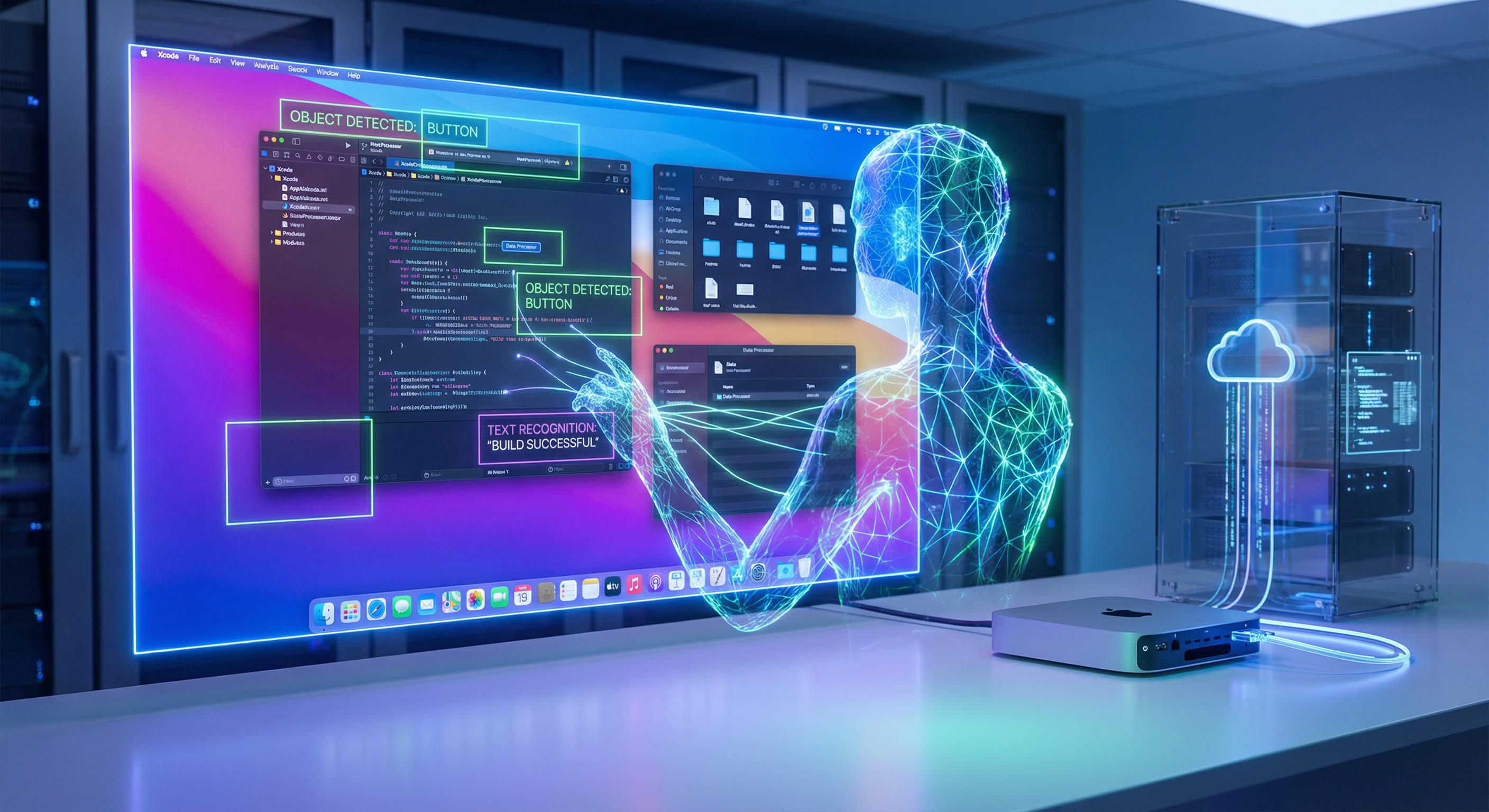
What Is a Cloud Digital Employee?
In practice, a cloud digital employee is a dedicated compute node that executes your workflows 24/7: nightly Xcode builds, UI test suites, TestFlight uploads, or vision-based AI agents like OpenClaw. It behaves like a team member that never sleeps: you define the job, schedule or trigger it, and the remote Mac runs it while you focus on other work. The difference from a traditional server or VM is that this "employee" is a full macOS environment with native display and GPU, so macOS-specific automation and GUI-dependent tools run exactly as they would on a local Mac.
VPSMAC provides these nodes as bare-metal Apple Silicon Macs (e.g. M4 Mac mini). You lease a machine for the duration you need; it is not shared with other tenants and there is no hypervisor. You get SSH access, full control over the OS and installed software, and the same display and GPU pipeline as a physical Mac on your desk. That makes it possible to run automation that depends on real screen capture, accessibility APIs, and Metal-backed workloads without the limitations of virtualized or shared Mac instances.
Why 24/7 Matters for Automation
Many development and release workflows benefit from running continuously or on a schedule. The idea is simple: automation that runs when you are not at your desk multiplies your effective capacity. A single developer with a cloud node running nightly builds and weekend test suites gets the same kind of feedback loop that used to require a dedicated build machine or a team member watching the pipeline. For distributed or async teams, a 24/7 node in a fixed time zone can run jobs at the same time every day, making logs and results easy to compare and debug.
Nightly builds ensure the main branch is always buildable; long UI test suites can run after hours so results are ready in the morning; TestFlight or internal distribution can be triggered the moment a tag is pushed. If the machine that runs these jobs is your laptop or a single office Mac, you face a trade-off: either leave the machine on and occupied, or accept that automation stops when you close the lid or go home. With a cloud node, the automation runs regardless of whether your local machine is on or off, and you can run multiple jobs in parallel by leasing more nodes.
Industry data on CI/CD and release automation consistently shows that teams that offload long-running or scheduled jobs to dedicated cloud capacity reduce feedback time and avoid "works on my machine" issues. The key is that the cloud environment matches the target platform. For iOS and macOS development, that means a real Mac. VPSMAC's model gives you that Mac as a dedicated resource, so there is no cold start from shared pools and no contention with other tenants that could delay or destabilize your runs.
VPSMAC Rental Model: Dedicated Mac, On Demand
VPSMAC does not sell shared virtual Mac instances. You rent a specific physical M4 Mac mini (or equivalent) for a defined period. The machine is assigned to you alone: full CPU, GPU, memory, and storage. You install your own tools, configure your automation, and run your workflows. When you no longer need the node, you release it and stop paying. This is similar to renting a physical server, but with the guarantee that you get unvirtualized Apple Silicon and standard macOS, so all native APIs and automation frameworks behave as documented.
From a cost perspective, you avoid upfront hardware purchase and ongoing power and cooling for a machine that might sit idle part of the time. You pay for the period you actually use. If you need more capacity during a release crunch, you add another node; when the crunch is over, you scale back. That elasticity is what makes the "digital employee" metaphor practical: you are not buying a permanent employee, you are hiring capacity when and where you need it.
Technical Foundation: Why Bare-Metal macOS
Automation that relies on the macOS GUI or vision-based agents has strict requirements. Screen capture must be low-latency and faithful; input injection must align with the same coordinate space and focus as the captured display; and the OS must expose accessibility and automation APIs without restriction. On a physical Mac, the display pipeline runs natively: framebuffer to display controller to screen. Capture APIs read from that pipeline with minimal overhead. In virtualized setups, the display path often goes through a software framebuffer or paravirtualized GPU, adding tens to hundreds of milliseconds of latency and sometimes altering resolution or timing. For an agent that reacts to what it sees on screen, that delay leads to misclicks and flaky behavior. Bare-metal removes that entire class of failure.
Benchmarks from teams running vision-based automation show that frame capture latency on bare-metal macOS typically stays under 16–33 ms per frame (roughly 30–60 fps), which is sufficient for agents that react to UI state changes. In virtualized environments, capture often incurs an extra 50–200 ms or more due to guest-to-host buffer copy and compositing; frame pacing can be irregular. That delay causes the agent to act on stale pixels—a dialog may have closed or a button moved—leading to misclicks and retries. A dedicated physical Mac in the cloud eliminates that failure mode while still giving you remote access and 24/7 availability.
GPU access is equally important for workloads that use the Neural Engine or Metal for inference or rendering. On physical M4, the GPU and Neural Engine are fully available. In virtualized Mac offerings, GPU passthrough is rare and often limited; you may get software rendering or a subset of capabilities. For 24/7 automation that runs unattended, consistency matters: the same input should produce the same output every time. Bare-metal M4 delivers that consistency.
Finally, the absence of a hypervisor means no guest-to-host scheduling quirks, no shared CPU or GPU with other tenants, and no provider-managed restrictions on accessibility or automation APIs. You run standard macOS (Sonoma or later) with the same entitlements and system extensions you would use on a local Mac. That predictability is critical when you are debugging a workflow that runs at 2 a.m.: you want the same environment every night, not one that can change because of host updates or noisy neighbors.
Use Cases: Builds, Tests, and AI Agents
Typical use cases for a 24/7 cloud digital employee on VPSMAC include the following.
- Nightly or scheduled Xcode builds. A cron job or CI trigger runs a full clean build and optionally runs tests. The node is always on, so there is no cold start; the job starts as soon as it is triggered.
- Long UI test suites. XCTest or third-party UI automation can run for hours. Running on a dedicated node avoids tying up a developer machine and allows parallel execution by leasing multiple nodes.
- TestFlight and App Store workflows. Scripts or automation agents can build, archive, upload to TestFlight, and notify the team. These steps often require a real Mac with proper code signing and provisioning; a VPSMAC node provides that environment 24/7.
- Vision-based AI agents (e.g. OpenClaw). Agents that see the screen and inject input need low-latency capture and native GPU. A dedicated physical Mac in the cloud is the recommended host; shared or virtualized Macs often introduce display or GPU quirks that reduce reliability.
In all cases, the pattern is the same: define the workflow once, run it on a schedule or trigger, and let the cloud node execute it while you use your local machine for development or other tasks.
Operational Benefits: No Local Lock-In
Running automation on a VPSMAC node means your laptop or desktop is free. You do not need to leave a machine on at the office or at home. You do not need to worry about the machine going to sleep, losing network, or being repurposed by someone else. The node is dedicated to your automation; you connect via SSH (and optionally VNC) to configure and monitor it. You can deploy the same workflows you would run locally: same macOS, same tools, same scripts. The only change is that the machine is remote and always on.
From a security and compliance angle, a dedicated node gives you full control over the OS image, installed software, and network configuration. You can harden the node, restrict outbound traffic, and keep credentials in a single environment. That is harder to achieve on multi-tenant Mac offerings where the provider manages the base image and policies.
Setting Up Your First 24/7 Automation Node
After leasing a VPSMAC M4 node, you receive SSH access and optional VNC for GUI-dependent workflows. The node runs standard macOS, so you can install Xcode, Homebrew, and any automation tools you use locally. There is no custom image or locked-down environment; you have full control over the OS and installed software. Typical steps are: install Xcode and command-line tools, clone your repositories, configure code signing and provisioning (if needed for builds or distribution), and then add cron jobs or hook the node into your CI system (e.g. via SSH or an agent).
A minimal setup for a scheduled build might look like this:
For OpenClaw or similar AI agents, you install the agent on the node, point it at the default display and native GPU, and run your workflows via the agent's CLI or API. The node stays on so the agent can run 24/7; you trigger tasks from cron, CI, or a scheduler. Because the node is bare-metal, the agent sees the same display and GPU behavior as on a local Mac, which maximizes reliability. Common pitfalls on virtualized or shared Macs—black or corrupted screen capture, misaligned input injection, or throttling under load—are avoided when the agent runs on a dedicated physical Mac. If you have already validated OpenClaw (or another vision-based agent) on a local Mac, moving that same binary and config to a VPSMAC node is a straightforward way to get 24/7 automation without leaving your machine on.
Scaling and Cost Efficiency
One node can run one long job at a time (or a queue of jobs). If you need to run multiple builds or test matrices in parallel, you lease additional nodes. When the workload drops, you release nodes and stop paying. There is no long-term commitment required; you scale up or down based on project needs. Compared to owning and maintaining dedicated Mac hardware, leasing shifts capital expense to operational expense and avoids over-provisioning for peak load. You also avoid the performance and reliability risks of shared or virtualized Mac instances: no noisy neighbors, no hypervisor updates that change behavior, and no restrictions on accessibility or automation APIs.
From a total-cost perspective, consider the alternative: buying an M4 Mac mini (or similar) solely for automation. You pay upfront for hardware, then ongoing power and cooling, and you must maintain and secure the machine. If the machine is idle for part of the day or week, you still bear the full cost. With rental, you pay only for the period the node is assigned to you. For seasonal or project-based workloads, that often translates to meaningful savings; for steady 24/7 use, the comparison depends on your local power and space costs, but you gain flexibility to change hardware or location without disposing of owned equipment.
Many teams also find that a single dedicated node is enough for nightly builds and occasional TestFlight uploads. When a release deadline approaches and you need to run multiple test configurations in parallel, you add a second or third node for a few weeks, then release them. That elasticity is difficult to achieve with owned hardware without over-provisioning year-round.
Who This Setup Is For
This model fits indie developers and small teams who want nightly builds, TestFlight uploads, or AI-driven automation without maintaining a dedicated Mac at home or in the office. It also fits larger teams that need extra Mac capacity for parallel UI tests or multiple release channels without buying more hardware. The common thread is the need for a real macOS environment that is always on, remotely accessible, and not shared with other workloads. If you have tried running automation on a shared or virtualized Mac and encountered flakiness, display issues, or API restrictions, a bare-metal rental node often resolves those problems because there is no hypervisor or multi-tenancy in the path.
Summary
A 24/7 cloud digital employee is a dedicated remote Mac that runs your automation around the clock so you do not have to tie up your local machine. VPSMAC's rental model provides that Mac as bare-metal Apple Silicon: no hypervisor, no multi-tenant sharing, full display and GPU pipeline. You get the same macOS behavior as a local Mac with the operational benefits of cloud compute: always-on availability, scalability by adding nodes, and pay-for-what-you-use pricing. Whether you run nightly builds, long UI tests, TestFlight uploads, or vision-based AI agents like OpenClaw, a VPSMAC M4 node is a proven way to build an always-on automation workstation without locking your own hardware. If you are evaluating where to run 24/7 macOS automation, start with a single node: deploy your workflows, run them on a schedule or trigger, and compare consistency and predictability to any shared or virtualized option. The difference in reliability is typically clear within the first few runs.