2026 OpenClaw dense release wave on Mac VPS: clean baseline, version pinning, and layered gateway to channel acceptance
If you already run OpenClaw seven days a week on a Mac VPS, the painful part of the April through May 2026 cadence is rarely the headline feature list. It is state pollution: overlapping global installs, stale compose stacks still binding port eighteen thousand seven hundred eighty-nine, and launchd environments that disagree with your interactive SSH session. This article gives operators three actionable paths: when to stay in place, when to rebuild under a clean Unix user, and when to revert a whole-machine snapshot before you pin versions again. You get an HTML decision matrix, a five-step runbook, three quantitative signals, and FAQ, cross-linked to the May release-train runbook, v2026.5.3 hardened install acceptance, gateway eighteen seven eight nine install ladder, and ACP rollback snapshots so upgrades read like audited change tickets instead of chat-room luck.
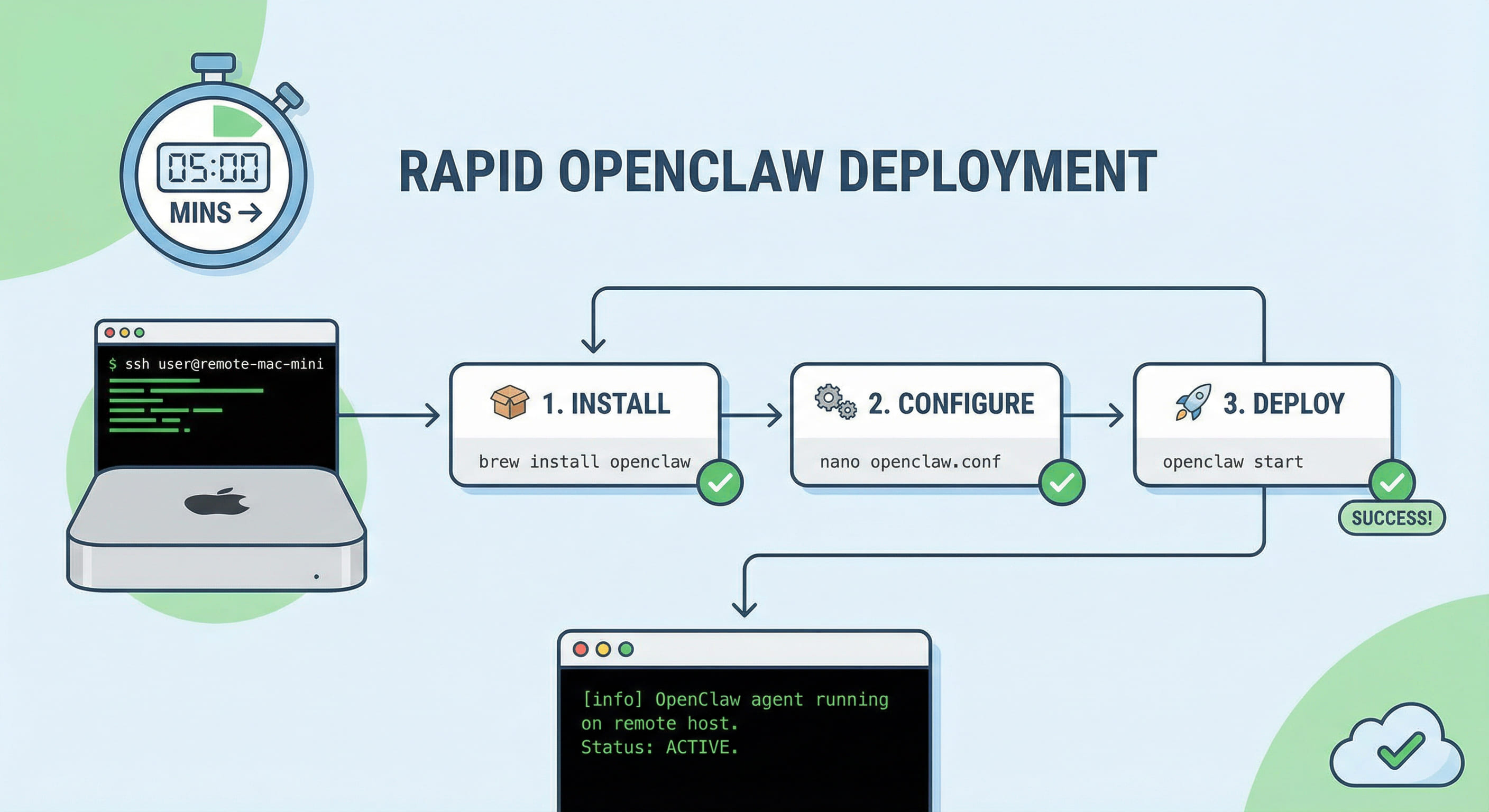
Table of contents
- 1. Pain breakdown: why rapid npm and image bumps desynchronize Mac VPS estates
- 2. Decision matrix: in-place, clean user, snapshot, and digest rollback
- 3. Binding noisy community threads to operator verbs
- 4. Five-step runbook: backup gate, pin, install, layered acceptance, observe
- 5. Three metrics: install integrity, gateway probes, channel variance
- 6. FAQ
- 7. Conclusion and next steps
1. Pain breakdown: why rapid npm and image bumps desynchronize Mac VPS estates
Mac VPS feels like Linux until you mix Node toolchains, long-lived gateway processes, optional Docker namespaces, and multiple instant messaging transports on one host. Under a short release train, pager time goes to descriptions that do not compress into a single version string: global versus project installs, two compose projects fighting the same listener, and plist EnvironmentVariables that never match what you exported inside tmux.
- Split install surfaces: Symptoms cluster around
ERR_MODULE_NOT_FOUNDor immediate gateway crashes. Blindnpm install -gretries without checking prefix, cache, and permissions stack half-old bytecode with half-new metadata until every later upgrade looks random. - Double gateways and port chains: Defaults center on port eighteen thousand seven hundred eighty-nine. If an older process or compose stack is still listening, the new stack fails with address-in-use or thrashes under launchd, which teams misread as unstable upstream code when the root cause is simply two instances. Downstream effects include Telegram conflict responses, duplicated webhook deliveries, and interleaved logs that explode triage cost.
- Environment drift and false health: An
openclaw doctorrun from your laptop SSH session can succeed while the launchd job uses a differentPATH,NODE_OPTIONS, orOPENCLAW_HOME. Acceptance then reports healthy command lines while production channels flap. The log shapes overlap with connected-but-silent channel incidents, so you must establish a single process truth before blaming model quotas.
2. Decision matrix: in-place, clean user, snapshot, and digest rollback
Use this matrix in a ten-minute preflight to pick the cheapest safe path instead of looping npm. Pair it with the release-train chapter for broader version-line context.
| Signal | Preferred path | Notes |
|---|---|---|
| Patch-level change, doctor matches under launchd and shell, no historical port fights | In-place upgrade | Still export plugins, compose digest, and doctor text per plugin hardening checklist. |
| Module loss, polluted global prefix, or mixed npm and pnpm roots | Clean user or clean HOME | Rebuild entirely under a fresh Unix account; keep the old tree read-only for comparison only. |
| Migration failure, inode anomalies, or no shared root cause within two hours | Snapshot rollback then re-pin | Restore continuity first, forensics second, using three-snapshot rollback language. |
| Docker with clear bind mounts and only digest movement | Digest-pinned compose rollback | Ban floating latest tags; health envelopes per Docker token runbook. |
3. Binding noisy community threads to operator verbs
Community write-ups are useful for risk windows, but production tickets need verbs: which directories to tar before upgrade, which three probes must finish inside thirty minutes, and which fingerprints prove nothing was skipped. Capture four artifacts every time: doctor from interactive shell, doctor from the launchd user, gateway status or equivalent deep logs, and channel probes plus a minimal conversational or webhook replay. Timestamp them inside the same maintenance window so you never mix pre-upgrade and post-upgrade slices.
Pinning must cover the Node floor, the OpenClaw package line or image digest, and the package manager prefix. Revalidate gateway.auth and reverse-proxy paths across loopback, intra-VPC, and tunneled public paths instead of curling localhost only. If you already terminate HMAC webhooks, merge inbound probes with this layered ladder as described in the webhook runbook.
| Operator action | Minimum artifact | First suspicion on failure |
|---|---|---|
| Pin Node | node -v matches plist environment |
Version manager not injected into daemon |
| Pin package or image | Lockfile or digest checked into repository | CI registry mirror diverges from production |
| Backup plugins and config | Tar checksum and size threshold | Silent skip of empty directories fake-success |
| Single-instance guard | Listening socket table before and after upgrade | Old compose stack never drained |
4. Five-step runbook: backup gate, pin, install, layered acceptance, observe
- Backup gate: Tar OpenClaw persistence paths with dated names and checksums; export compose files, image digest, launchd plist, and token fingerprints; spot-check extraction on a read-only laptop copy so you never upload an empty archive. If the cloud vendor offers snapshots, record snapshot identifiers on line one of the ticket.
- Pin versions: Write the Node floor and OpenClaw line explicitly; for Docker, replace mutable tags with digest-pinned references and document the rollback compose command. For global npm installs, document prefix and writable roots so you never fight macOS protected paths accidentally.
- Install or migrate: When the matrix says clean user, finish a full install under a fresh account before switching
UserNamein plist; avoid repeatedly overwriting half trees in the same HOME. For Docker, validate bind mount uid mapping per Docker pairing guidance so upgrades do not write through the wrong host directory. - Layered acceptance: First run doctor under the exact launchd environment, second validate listener and auth probes on the gateway, third run channel probes and a minimal conversation. Failures must shrink instance count before deep dives. Keep the command ladder from gateway install runbook so you do not jump to model logs while port binding is still wrong.
- Observe and rollback: Track restart counts, end-to-end message latency p95, and free disk percentage for at least four hours post-change. If restarts double versus baseline, latency doubles after ruling out provider throttling, or disk crosses your agreed floor, open a rollback decision; if snapshots exist, revert first and forensics second.
whoami > /var/log/openclaw/pre-$(date +%Y%m%d)-user.txt
node -v >> /var/log/openclaw/pre-$(date +%Y%m%d)-user.txt
openclaw doctor > /var/log/openclaw/pre-$(date +%Y%m%d)-doctor.txt
openclaw gateway status --deep > /var/log/openclaw/pre-$(date +%Y%m%d)-gw.txt 2>&1 || true
lsof -nP -iTCP:18789 -sTCP:LISTEN || true
5. Three metrics: install integrity, gateway probes, channel variance
- Install integrity fingerprint: Diff doctor outputs for version strings, plugin scan sections, and Node paths across upgrade; when interactive succeeds but launchd fails, classify as environment defect and fix plist before debating upstream regressions.
- Gateway probe success rate: Measure authenticated HTTP health over twenty-four hours; failures clustered on calendar boundaries may implicate certificate rotation or log rotation, while failures aligned with deploy timestamps should re-check double listeners first.
- Channel variance and conflict counts: For Telegram-style long polling, count hourly four zero nine responses; non-zero counts demand single-instance guards before rereading multi-channel acceptance for token reuse across environments.
6. FAQ
Does a clean baseline delete conversation history? Changing persistence roots without export or import can; if you cannot tolerate loss, prefer snapshot maintenance windows.
Is laptop-only acceptance enough? It is a rehearsal only; launchd on the Mac VPS still needs its own doctor and channel probes.
Must plugins be backed up? Yes; omitting them causes flaky tool loads that look random after upgrades.
7. Conclusion and next steps
Running OpenClaw long-term on generic Linux VPS is possible, but you keep paying abstraction tax on bind mounts, user namespaces, and Apple-toolchain documentation mismatches. When your runbooks already assume SSH operations yet you still need native macOS paths for reproducible triage, placing the gateway on bare-metal macOS cloud usually lowers total cost of ownership versus stacking more containers on the wrong substrate.
During a dense release window, stability is less about any single semver and more about whether install surfaces, daemons, and channels remain independently observable layers. If you want predictable disks, stable egress, Apple Silicon friendly seven-by-twenty-four behavior, and tickets auditors can replay, renting VPSMAC Mac cloud nodes with aligned regions, plist policy, and snapshot discipline typically beats endlessly reinstalling on ill-fitting compute.