2026 OpenClaw 자주 나오는 오류와 트러블슈팅 체크리스트: 설치 실패·시작 오류·연결 타임아웃
OpenClaw를 배포 중이거나 이미 운영 중인 개발자에게 자주 발생하는 설치 실패, 시작 멈춤, gateway 연결 문제, 타임아웃. 본 가이드는 2026년 자주 나오는 오류와 원인 대응표, 설치/시작/연결 단계별 점검, 트러블슈팅 표와 5단계 빠른 해결 절차, Mac 클라우드 호스트에서 안정적으로 OpenClaw를 운영하는 3가지 팁을 정리했습니다.
In this guide
- 1. OpenClaw 2026 common error types and causes
- 2. Install: dependencies, permissions, paths
- 3. Startup and runtime: ports, env, process issues
- 4. Connection and timeouts: network, proxy, remote access
- 5. Troubleshooting table and 5-step quick fix
- 6. Three tips for stable OpenClaw on a Mac cloud host
1. OpenClaw 2026 common error types and causes
Typical 2026 issues fall into three buckets: install (deps, permissions, paths), startup/runtime (ports, env, process hangs), and connection/timeouts (network, proxy, remote access). Matching the symptom to the bucket saves time.
- Install failures: Node too old (official requirement Node.js 22+), pnpm missing or outdated, Xcode CLI tools missing (for source builds), low disk space, or no write permission to global or project dirs.
- Startup issues: Gateway stuck at "Starting…", port 18789 in use, env vars unset or CLI not on PATH, or launchd misconfiguration so the process never starts or keeps exiting.
- Connection timeouts: Firewall blocking, proxy/VPN breaking API or Web UI access, or remote access without SSH tunnel/reverse proxy so traffic is blocked by ISP or policy.
2. Install: dependencies, permissions, paths
Before installing, check: node -v must be v22+; pnpm -v installed; for source builds, Xcode Command Line Tools and xcode-select -p output. For EACCES on global install, do not use sudo for npm; fix global dir permissions or use nvm/fnm. Avoid paths with spaces or non-ASCII; on Windows WSL, install inside WSL filesystem, not under /mnt/c. For "module not found" or "Cannot find package", run pnpm install or npm install first.
3. Startup and runtime: ports, env, process issues
Gateway uses port 18789. If it sticks at "Starting…", run openclaw gateway status and openclaw gateway stop, then check if the port is in use (macOS/Linux: lsof -i :18789) and kill the process if needed. Set required API keys or config in env; for launchd, set EnvironmentVariables in the plist. Repeated exits often mean a dependency not ready, low memory, or no write permission to the log dir. Run openclaw gateway in the foreground once to see the full error, then check docs or Issues.
4. Connection and timeouts: network, proxy, remote access
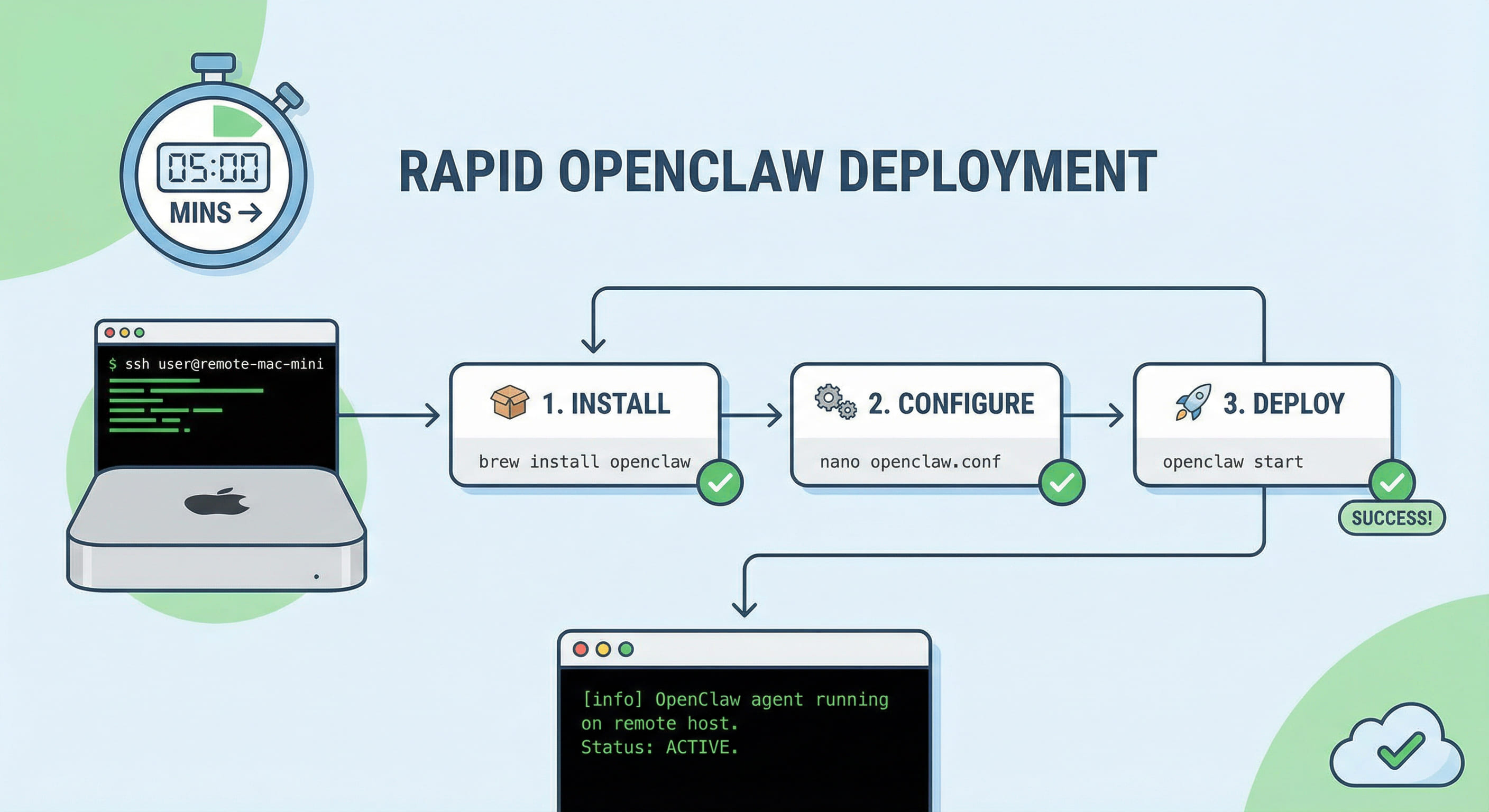
If the Web UI works locally but not remotely, it is usually firewall or no port exposure. Do not expose 18789 to the internet; use SSH local forwarding, e.g. ssh -L 18789:127.0.0.1:18789 user@your-mac-cloud-host, then open http://127.0.0.1:18789 in the browser. For team access, put a reverse proxy with auth (e.g. Nginx + basic auth or OAuth) in front. For API or upstream timeouts, test with curl -v and adjust HTTP_PROXY/HTTPS_PROXY or network whitelist if needed.
5. Troubleshooting table and 5-step quick fix
Use this table to map symptom → likely cause → action.
| Symptom | Likely cause | Action |
|---|---|---|
| Node / pnpm install errors | Node <22, pnpm missing or old | Upgrade Node to 22+, install/upgrade pnpm |
| EACCES permission error | No write to global dir | Change npm global prefix or use nvm/fnm; do not sudo npm |
| Gateway stuck at Starting… | 18789 in use or old process | openclaw gateway stop; lsof -i :18789 then kill |
| Remote cannot open Web UI | No port forward or firewall | SSH -L local forward or Nginx reverse proxy + auth |
| Upstream API timeout | Proxy, DNS, or network policy | curl -v to test; set proxy or check whitelist |
5-step quick fix: ① Identify whether the error is install, startup, or connection. ② Use the table above to narrow the cause. ③ Apply the suggested fix (version, port, permissions, network). ④ If it still fails, read the full stack trace and docs. ⑤ For complex setups (multi-machine, proxy, corp network), consider moving OpenClaw to a dedicated Mac cloud node to reduce local interference.
6. Three tips for stable OpenClaw on a Mac cloud host
When local or generic VPS runs remain unstable after troubleshooting, the cause is often resource contention, messy network, or scattered permissions. Running OpenClaw on a dedicated Mac cloud host avoids sharing CPU/memory with dev or other services; macOS gives you launchd, Xcode CLI, and Apple tooling, which fits 7x24 gateway and Agent workloads.
Three tips: ① Use a dedicated Mac node for OpenClaw only. ② Access the Web UI via SSH tunnel instead of exposing the port. ③ Run the process under launchd with logging and auto-restart for easier debugging and audit. If you prefer to skip self-hosted Mac ops and networking, renting a VPSMAC Mac cloud host is often the simplest and most scalable option; use the checklist above to deploy in a clean environment and verify.