DeepSeek V4 Full Release (July 2026): Pricing, Benchmarks & How It Stacks Up Against GPT-5.6
If your production stack still calls deepseek-chat or routes everything through a single closed-source API, the July 20 GA of DeepSeek V4 changes the math. This guide for API teams and model buyers covers the full release timeline, V4-Pro vs V4-Flash architecture, benchmark tables against GPT-5.6 Sol and Claude Fable 5, peak-valley pricing, four cost-saving tactics, Python SDK migration code, a five-step Runbook, and six FAQs — everything you need before the July 24 legacy endpoint sunset.
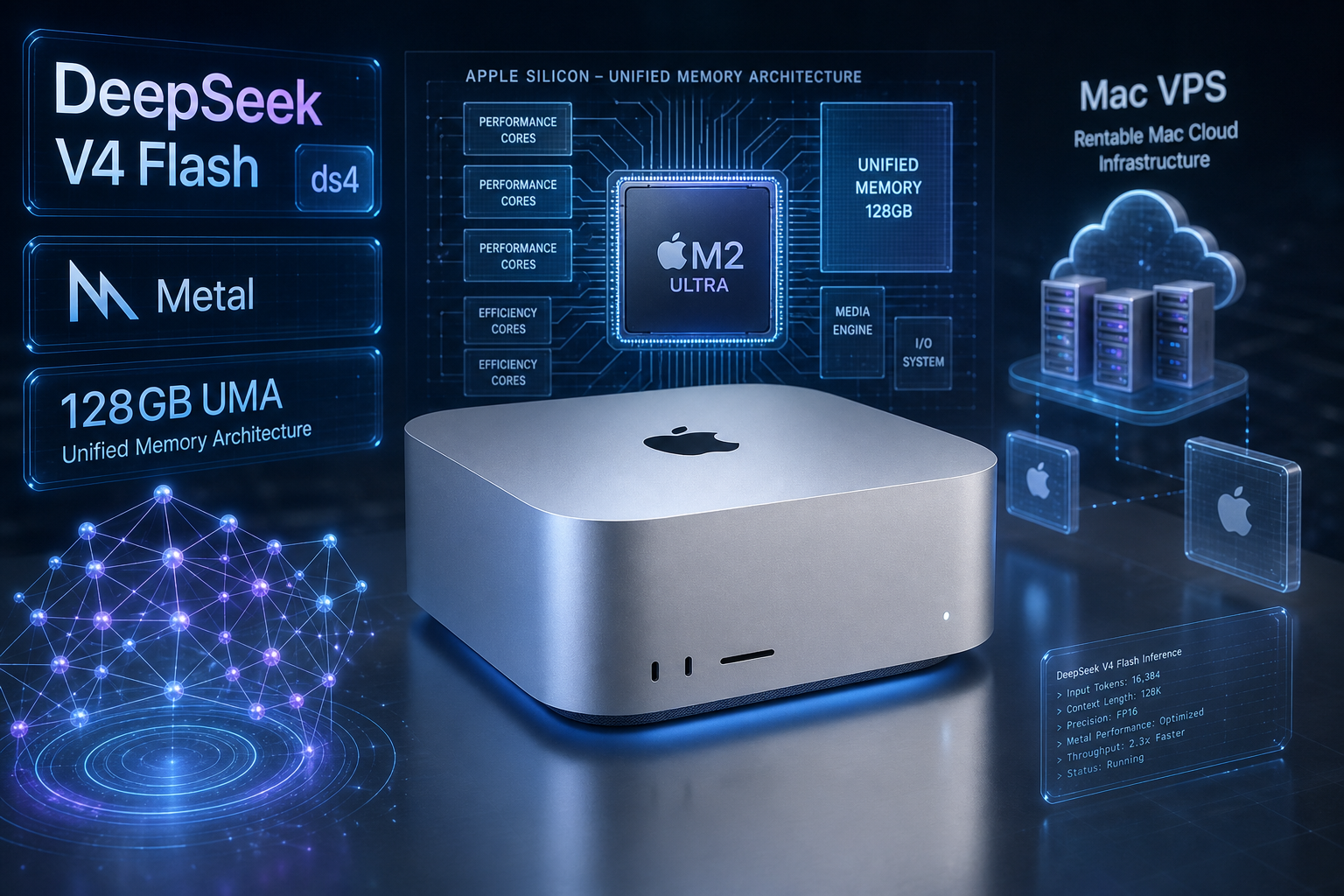
Table of Contents
Pain Points: Why V4 GA Forces a Routing Reset
- Legacy endpoints die in four days.
deepseek-chatanddeepseek-reasonerretire on July 24, 2026 at 15:59 UTC. Any cron job, OpenClaw gateway, or CI pipeline still pointing at the old IDs will hard-fail without a config change — and most teams discover this only when the first off-hours batch job breaks. - Peak-valley billing is new and easy to underestimate. GA introduces 2× rates during Beijing weekday peak windows (09:00–12:00 and 14:00–18:00). A 24/7 Agent that cannot shift load sees an effective 20–30% bill increase even though off-peak baseline prices stayed flat after June's 75% cut.
- Model selection got harder, not simpler. V4 ships two MIT-licensed variants plus three reasoning modes, while Kimi K3 now holds the open-weight scale record at 2.8T parameters. Teams need a routing matrix — not a single default model — to capture V4's 116× cost advantage over Fable 5 without sacrificing quality on hard repo tasks.
Release Timeline: Preview to GA in 87 Days
| Date | Milestone |
|---|---|
| April 24, 2026 | V4 Preview launch — V4-Pro and V4-Flash under MIT, 1M context, CSA/HCA architecture unveiled |
| May 2026 | Production tuning — concurrency scaled to 500+ for V4-Pro, ds4 Metal engine ships for Mac local inference |
| June 2026 | Permanent 75% price cut on V4-Pro API rates; OpenRouter weekly volume for V4-Flash crosses 3.43T tokens |
| June 29, 2026 | Email to API users announcing mid-July GA and upcoming peak-valley pricing mechanism |
| July 19, 2026 | Gray release — select accounts receive GA endpoints early for validation |
| July 20, 2026 | General Availability (GA) — official V4 with peak-valley billing and performance optimizations |
| July 24, 2026 | Legacy retirement — deepseek-chat and deepseek-reasoner deprecated at 15:59 UTC |
What Is DeepSeek V4?
DeepSeek V4 is a dual-variant MoE family — V4-Pro for maximum reasoning depth and V4-Flash for high-throughput Agent workloads — both shipping with a 1M-token context window, 384K max output, and an MIT license. Unlike V3, which split thinking and non-thinking into separate model IDs, V4 exposes reasoning effort as a request parameter across a single weight set.
| Spec | V4-Pro | V4-Flash |
|---|---|---|
| Total parameters | 1.6T | 284B |
| Active per token | 49B | 13B |
| Transformer layers | 61 | 43 |
| Context window | 1,048,576 tokens (1M) | |
| Max output | 384,000 tokens | |
| Precision | FP4 weights + FP8 activations | |
| Training data | 33T+ tokens | 32T+ tokens |
| License | MIT | |
| API model ID | deepseek-v4-pro | deepseek-v4-flash |
| Weights on disk | ~865 GB | ~160 GB |
One-liner: DeepSeek V4 is an open-weight, 1M-context coding AI that matches frontier closed models on SWE-bench Verified at a fraction of the price — with GA peak-valley billing and a hard July 24 migration deadline.
Architecture: CSA, HCA, mHC & Muon
V4's headline is not raw parameter count — it's serving cost reduction. The attention stack combines two compression mechanisms plus training innovations that cut FLOPs and KV memory versus V3.2.
Compressed Sparse Attention (CSA)
- 4× compression on attention maps via learned sparsity patterns;
- FP4 lightning indexer selects relevant KV blocks at near-zero overhead;
- Retains top-1024 keys for Pro and top-512 for Flash per head;
- 128-token sliding window preserves local coherence between sparse blocks;
- Net result: 27% of V3.2 FLOPs at equivalent context length.
Heavily Compressed Attention (HCA)
- 128× compression on selected layers via low-rank KV projection;
- Deployed on alternating layers — CSA handles precision, HCA handles bulk memory;
- KV cache footprint drops to 10% of V3.2 for Pro and 7% for Flash.
Manifold-Constrained Hyper-Connections (mHC)
Standard residual connections accumulate noise across depth. mHC routes information through a 4-channel residual pathway constrained to the Birkhoff polytope — ensuring each channel's mixing weights form a doubly-stochastic matrix. This stabilizes training at 60+ layers without the representation collapse seen in naive deep MoE stacks.
Muon Optimizer
V4 continues DeepSeek's use of the Muon optimizer (Momentum Updated Orthogonalized) for large-matrix parameters, paired with AdamW on embeddings and norms. Moonshot's Kimi K3 independently adopted per-head Muon variants — convergent evidence that orthogonalized updates scale better for trillion-parameter MoE training.
Three Reasoning Modes
V4 exposes reasoning depth as a request parameter rather than a separate model:
| Mode | API parameter | Behavior | Best for |
|---|---|---|---|
| Non-think | thinking: disabled | Direct response, lowest latency and cost | Classification, summarization, simple codegen |
| Think High | thinking: enabled | Extended chain-of-thought before answer | Multi-step debugging, math, Agent planning |
| Think Max | thinking: max | Deepest reasoning, supports 384K+ output | Long-form proofs, repo-wide refactors, research |
Official recommendation for thinking modes: set temperature=1.0 and top_p=1.0. Lower values can collapse diversity in extended reasoning chains.
Benchmark Results
| Benchmark | V4-Pro (GA) | V4-Flash (GA) |
|---|---|---|
| SWE-bench Verified | 80.6% | 79.0% |
| SWE-bench Pro | 55.4% | — |
| LiveCodeBench | 93.5% | 91.6% |
| Codeforces Elo | 3,206 | 3,052 |
| Terminal-Bench 2.1 | 83.9% | — |
Reading the table: V4-Pro's 80.6% on SWE-bench Verified places it within striking distance of Claude Opus 4.8 territory. Terminal-Bench 2.1 at 83.9% signals strong tool-use and shell interaction — relevant for OpenClaw and CI Agent deployments. Codeforces Elo 3,206 confirms competition-grade algorithmic skill.
⚠️ Caveat: These are DeepSeek self-reported scores with vendor-specific harnesses. Independent third-party reproductions are still in progress.
Cost-Performance: 116× Cheaper Than Fable 5
Benchmark points alone miss the production story. DeepSeek published a task-level cost comparison on SWE-style workloads:
| Model | Cost per task | Quality score | Notes |
|---|---|---|---|
| Claude Fable 5 | $3.48 | 50 pts | Frontier quality, highest unit cost |
| DeepSeek V4-Pro | $0.03 | 38 pts | 116× cheaper; 76% of Fable quality at <1% cost |
For high-volume Agent loops processing thousands of tasks daily, this gap dominates total cost of ownership more than any single benchmark delta.
Head-to-Head: V4-Pro vs GPT-5.6 Sol vs Claude Fable 5
| Dimension | DeepSeek V4-Pro | GPT-5.6 Sol | Claude Fable 5 |
|---|---|---|---|
| SWE-bench Verified | 80.6% | ~78% | ~82% |
| Terminal-Bench 2.1 | 83.9% | 88.8% | 84.6% |
| LiveCodeBench | 93.5% | ~91% | ~90% |
| Context window | 1M | 400K | 200K |
| Output $/1M (off-peak) | $0.87 | ~$30 | ~$50 |
| Open weights (MIT) | Yes | No | No |
| Self-host option | Yes (865 GB) | No | No |
| Export-control risk | Low (Chinese vendor, MIT weights) | Medium | High (Fable 5 access restrictions) |
V4-Pro does not win every row — GPT-5.6 Sol still leads Terminal-Bench and Fable 5 edges SWE-bench Verified — but the price/context/open-weight combination is unmatched among frontier-tier models.
Which Model When: Scenario Matrix
| Scenario | Recommended model | Why |
|---|---|---|
| High-volume Agent / batch loops | V4-Flash (Non-think) | Lowest $/token; 13B active params still strong on LiveCodeBench |
| Multi-step coding Agent | V4-Flash (Think High) | Good reasoning at ~3× lower cost than Pro |
| Complex repo-level bug fixes | V4-Pro (Think Max) or Claude Fable 5 | SWE-bench Pro 55.4%; Fable 5 still leads FrontierSWE |
| Terminal / shell-heavy workflows | GPT-5.6 Sol | Terminal-Bench 2.1 leader at 88.8% |
| 1M-token document analysis | V4-Pro or Kimi K3 | Both offer 1M context; K3 leads some long-doc benchmarks |
| Cost-sensitive production default | V4-Flash | $0.28/M output off-peak; cache hit input at $0.0028/M |
| Self-hosted / air-gapped deploy | V4-Flash via ds4 on Mac | 160 GB weights fit 128 GB Mac; MIT license |
| Maximum reasoning depth | V4-Pro (Think Max) | 384K+ output; 49B active params per token |
Peak-Valley Pricing: Full Rate Tables
GA introduces peak-valley billing — the first major LLM API to price by time-of-day. Off-peak rates match the June post-discount baseline. Peak rates are exactly 2× off-peak.
Peak hours (Beijing time, UTC+8): weekdays 09:00–12:00 and 14:00–18:00. All other times — including nights, weekends, and holidays — bill at off-peak rates.
V4-Pro — USD (per 1M tokens)
| Billing item | Off-peak | Peak (2×) |
|---|---|---|
| Input (cache hit) | $0.003625 | $0.00725 |
| Input (cache miss) | $0.435 | $0.87 |
| Output | $0.87 | $1.74 |
V4-Pro — CNY (per 1M tokens)
| Billing item | Off-peak (¥/M) | Peak (¥/M) |
|---|---|---|
| Input (cache hit) | ¥0.025 | ¥0.05 |
| Input (cache miss) | ¥3.00 | ¥6.00 |
| Output | ¥6.00 | ¥12.00 |
V4-Flash — USD (per 1M tokens)
| Billing item | Off-peak | Peak (2×) |
|---|---|---|
| Input (cache hit) | $0.0028 | $0.0056 |
| Input (cache miss) | $0.14 | $0.28 |
| Output | $0.28 | $0.56 |
V4-Flash — CNY (per 1M tokens)
| Billing item | Off-peak (¥/M) | Peak (¥/M) |
|---|---|---|
| Input (cache hit) | ¥0.02 | ¥0.04 |
| Input (cache miss) | ¥1.00 | ¥2.00 |
| Output | ¥2.00 | ¥4.00 |
Four Cost-Saving Tips
- Schedule batch jobs off-peak. Queue SWE-style refactors, test generation, and document summarization for Beijing nights and weekends. A job that costs $87 per 100M output tokens off-peak costs $174 during peak.
- Structure prompts for cache hits. Keep a static system prompt prefix across requests. Cache-hit input on V4-Flash is $0.0028/M — roughly 1% of cache-miss cost. Agent frameworks with fixed tool schemas benefit most.
- Route by task complexity. Default to V4-Flash Non-think for classification and simple codegen. Escalate to V4-Pro Think Max only when SWE-bench Pro-level reasoning is required. Reserve Fable 5 for tasks where V4 trails by >10 points.
- Disable thinking when you don't need it. Think High and Think Max consume hidden reasoning tokens billed as output. For latency-sensitive chat and RAG Q&A, Non-think mode cuts both cost and time-to-first-token dramatically.
API Migration: Model ID Mapping & Code Examples
Legacy endpoints map cleanly to V4:
| Legacy ID | Replacement | Notes |
|---|---|---|
deepseek-chat | deepseek-v4-flash (Non-think) | Drop-in for chat/completion workloads |
deepseek-reasoner | deepseek-v4-flash (Think High) or deepseek-v4-pro | Use Pro for maximum reasoning depth |
Hard deadline: July 24, 2026 at 15:59 UTC. After this timestamp, legacy IDs return errors.
OpenAI SDK (Python)
Anthropic SDK (Python)
Both SDK paths hit the same V4 weights. Pick OpenAI format for existing LangChain/LiteLLM integrations; Anthropic format if your stack already uses Claude-compatible clients.
Citable Technical Facts (EEAT)
- Attention efficiency: CSA + HCA reduce inference FLOPs to 27% of V3.2; KV cache memory is 10% of V3.2 (Pro) and 7% (Flash).
- Cost-per-task: V4-Pro at $0.03/task vs Claude Fable 5 at $3.48/task — a 116× unit-cost gap on SWE-style workloads.
- Context/output ceiling: 1M input and 384K max output on both variants — Think Max can consume the full output budget for extended proofs.
- Training scale: 33T+ tokens (Pro) and 32T+ tokens (Flash) with Muon optimizer and mHC 4-channel residuals.
- Peak-valley spread: Off-peak V4-Flash output at $0.28/M vs peak at $0.56/M — schedule-aware routing saves up to 50% on time-sensitive batches.
Five-Step Migration Runbook
Step 2 Map — deepseek-chat → deepseek-v4-flash (Non-think); deepseek-reasoner → deepseek-v4-flash Think High or deepseek-v4-pro Think Max
Step 3 Configure — set base_url to https://api.deepseek.com (OpenAI) or /anthropic (Anthropic SDK); temperature=1.0, top_p=1.0 for thinking modes
Step 4 Pilot — run 20 representative tasks off-peak AND during a peak window; log tokens, cache hits, quality, and $/task
Step 5 Deploy hybrid routing — bulk Agent → V4-Flash off-peak; hard reasoning → V4-Pro Think Max; fallback Fable 5 / GPT-5.6 Sol where V4 trails; cut over before Jul 24 15:59 UTC
Frequently Asked Questions
What is the deadline to migrate from deepseek-chat?
July 24, 2026 at 15:59 UTC. After that, deepseek-chat and deepseek-reasoner return API errors. Map them to deepseek-v4-flash and deepseek-v4-pro respectively.
When do peak-hour rates apply?
Weekdays 09:00–12:00 and 14:00–18:00 Beijing time (UTC+8). Every listed rate doubles during peak. Nights, weekends, and holidays bill at off-peak baseline.
Should I use V4-Pro or V4-Flash?
V4-Flash for volume Agent loops and cost-sensitive defaults. V4-Pro for SWE-bench Pro-level reasoning, Think Max mode, and tasks where the extra 36B active parameters matter.
Can I self-host V4 on a Mac?
Yes — both variants are MIT-licensed. V4-Flash runs on 128 GB+ Apple Silicon via antirez ds4. V4-Pro needs 512 GB unified memory or a multi-GPU server.
How does V4 compare to Kimi K3?
Kimi K3 leads on parameter scale (2.8T) and several long-horizon benchmarks, but V4-Pro wins decisively on cost-per-task and already has GA API endpoints with peak-valley billing.
Are the benchmarks trustworthy?
Self-reported with vendor harnesses. SWE-bench Verified 80.6% is directionally credible but should be validated with your own pilot before production routing decisions.
Bottom Line
DeepSeek V4 GA is not a cosmetic version bump — it is a production-grade open-weight family with 1M context, MIT licensing, frontier-near coding benchmarks, and a pricing model that undercuts Claude Fable 5 by orders of magnitude. The peak-valley mechanism adds scheduling complexity, but off-peak rates stayed flat after June's 75% cut, and teams that batch intelligently pay no premium at all.
Key dates: July 20 → GA live · July 24, 15:59 UTC → legacy endpoints retired.
API-only deployments still leave you without a co-located environment for 7×24 Agent loops, Apple toolchain tasks (Xcode, Fastlane, notarytool), or air-gapped inference. Running ds4 locally on a laptop means sleep-interrupted long jobs and commingled API keys with production repos. For teams that want V4 Flash or Pro self-hosted alongside iOS CI or OpenClaw gateways, renting a VPSMAC M4 Mac cloud node — native macOS, SSH + launchd for unattended agents, elastic 128/256/512 GB memory tiers — is usually more stable than personal hardware or a generic Linux VPS. See our ds4 + DeepSeek V4 on Mac guide for memory thresholds and a reproducible Runbook.
Sources: DeepSeek API pricing docs · antirez ds4 repository · DeepSeek V4 tech report · OpenRouter weekly token rankings
Data as of 2026-07-20. Benchmarks are DeepSeek self-reported. Pricing and model capabilities may update — verify latest official docs before production decisions.