2026 OpenClaw Production Hardening: Exposure, Gateway Tokens, Sandbox & Mac Cloud Isolation Checklist
A working openclaw dashboard is not a production go-live: default listeners, weak auth, secrets in logs, and permissive egress turn into incidents in 2026. This article assumes you finished the first five deploy steps and may be choosing among Docker, npm, or source on Mac cloud. You get a five-row exposure checklist, least-privilege gateway guidance with a six-step token rotation runbook, sandbox plus egress combinations for common automation roles, Mac cloud isolation with backup/rollback, and FAQ on upgrade drift and multi-instance installs—cross-linked with common error triage.
In this article
- 1. Five common self-hosted OpenClaw exposure classes (checklist)
- 2. Gateway & tokens: least privilege and rotation
- 3. Sandbox & egress patterns by workload
- 4. Isolation on Mac cloud: split roles, backup, rollback
- 5. Why dedicated Mac nodes beat "good enough" for 24/7
- 6. FAQ: upgrade drift and multiple instances
1. Five common self-hosted OpenClaw exposure classes (checklist)
Docs and incident writeups in 2026 repeat the same pattern: an agent gateway exposed to the internet without strong authentication is a scriptable remote control surface. When OpenClaw listens on 18789 with a security group open to 0.0.0.0/0, scanners arrive within hours; verbose logging plus flat environment variables for API keys completes the failure mode. Use the table as a one-page internal checklist alongside error triage.
| Exposure | Symptom | Severity | First fix |
|---|---|---|---|
| Over-broad listen | 18789 reachable from the public internet | High | Bind loopback or private NIC; default deny SG; allow office IP or VPN only |
| Weak gateway auth | No token, short password, shared secret across services | High | Random high-entropy tokens, per-service keys, rotation with version tags |
| Discovery / debug | mDNS or debug endpoints left on | Medium | Disable per upstream docs; turn off debug in prod |
| Unrestricted egress | Agent can hit any URL or RFC1918 range | High | Allow-list domains; block cloud metadata unless required; egress proxy |
| Secrets in logs or images | DEBUG prints tokens; .env baked into layers | High | Redact logs; inject secrets at runtime; multi-stage builds strip secrets |
Three pains deserve emphasis: dashboard access equals agent control, so treat UI/API auth like internal IAM. Containers are not automatic isolation—mounting host paths or the Docker socket can bypass sandbox goals. Upgrades change defaults; without Git-tracked config, "secure last week" can silently regress.
Technical anchors: (1) Treat 18789 as deny-by-default at the firewall. (2) Prefer ≥32 bytes of cryptographically random token material delivered via a secret manager. (3) Schedule openclaw doctor and ship JSON output to immutable storage for drift detection.
2. Gateway & tokens: least privilege and rotation
Least privilege in three questions: who can connect, to which interface, and what can they invoke after auth? Assume continuous internet scanning—default bind to 127.0.0.1 or RFC1918, front with mTLS nginx or SSH port forwarding; if you must expose directly, add IP allow-lists and rate limits.
Six-step token rotation (works with GitOps):
- Inventory every consumer of gateway credentials (CI, monitoring, laptops).
- Dual issue new token
v2with a documented sunset window (e.g., 72h) forv1. - Canary on staging or a single Mac cloud node before fleet rollout.
- Watch 401/403 spikes to catch stale clients.
- Revoke v1 after the window; reload gateway config.
- Audit attach ticket IDs and owners for compliance.
Reverse proxies should terminate TLS and enable HSTS so credentials never cross regions in cleartext HTTP.
Technical anchors: Rotation windows should cover at least one full release cycle. Use separate tokens per vendor or contractor instead of a shared master key. Ship structured auth-failure logs to SIEM with IP, User-Agent, and redacted paths.
3. Sandbox & egress patterns by workload
Sandboxing limits syscalls, filesystem roots, and network targets. Consensus in 2026: default deny, allow by playbook. A Slack-only bot should not reach cloud metadata IPs or arbitrary RFC1918 unless explicitly required.
| Workload | Sandbox | Egress | Note |
|---|---|---|---|
| External support bot | Read-only FS, no local shell | Allow-listed SaaS domains only | Blocks lateral moves to internal DBs |
| Internal ops helper | Read-only log mounts | Internal log APIs + deny public internet | Pair with VPN or zero-trust identity |
| Dev assistant writing repos | Ephemeral workspace per task | Git + package mirrors, block unknown CDNs | Require PR automation as second gate |
Technical anchors: Combine host firewall, cloud network policy, and egress proxies. Time-bound allow rules with ticket-linked expiry. Store allow-lists as versioned YAML under code review.
4. Isolation on Mac cloud: split roles, backup, rollback
Run production OpenClaw on dedicated Mac cloud hosts, not daily-driver laptops: crashes do not take down your desktop; caches and configs centralize for backup; suspected compromise can roll back via snapshot. Pattern: dev/review on physical hardware; production agents only on isolated nodes with launchd or vendor watchdogs restarting failed processes.
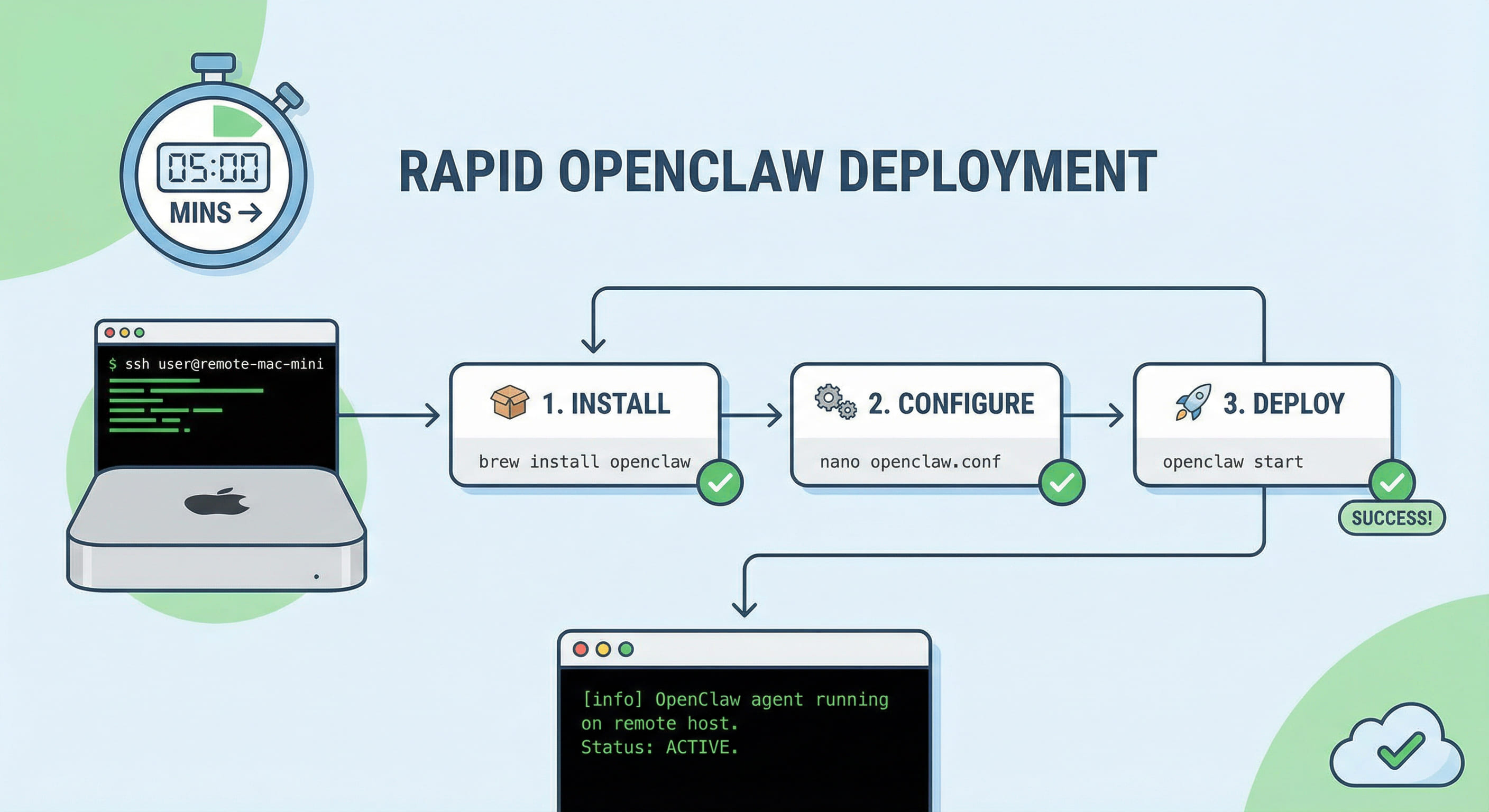
Backup at least: config trees, secret references (not raw secrets), custom tool scripts, and pinned OpenClaw versions. Upgrade flow: clone a fresh Mac node, validate, swing traffic, keep the old node 48h. That complements the fast path in the five-minute VPSMAC deploy guide—lab and production baselines should differ.
Multiple instances need distinct data dirs, port offsets, log prefixes, and health checks so automation does not kill neighbors. Shared queues need separate DB indexes or key namespaces.
Outside change windows, run a lightweight red-team check: hit 18789 from an unauthorized IP and call the API with a bad token—verify denies and alerting fire as expected.
5. Why dedicated Mac nodes beat "good enough" for 24/7
Long-running gateways on Windows or hybrid WSL often fight signal handling, file locks, and GUI session quirks. Docker accelerates delivery but adds network namespaces and volume mounts that complicate incidents—and mounting sensitive host paths weakens sandbox value. Mixing prod and dev on one laptop couples credential risk with your entire digital identity.
Moving from "it runs" to "it runs 24/7 with auditability" is easier on SSH-managed, snapshot-friendly Mac cloud hardware with tight exposure controls. For teams that need native Unix tooling plus Apple-friendly stacks, renting VPSMAC M4 Mac cloud nodes is usually calmer than stretching personal machines or over-relying on ad-hoc Docker laptops: the platform owns power and network; you own policy, rotation, and monitoring.
6. FAQ: upgrade drift and multiple instances
How do I detect config drift after upgrades?
Version effective config and doctor output; post-upgrade automated diff; alert on new listeners or tool permissions.
Can two OpenClaw instances share one host?
Yes, with separate ports, data directories, and env vars; do not share gateway tokens if you need clean audit trails.
Native Mac cloud vs Docker?
Shorter debug path and better launchd integration; see the Docker/npm/source comparison matrix for trade-offs.